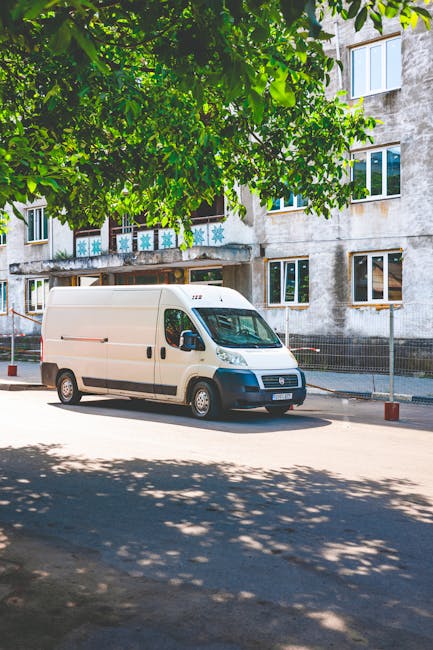
Best Van Access on Chase Cross Road for Removals: A Practical Local Guide
If you are planning a move on or around Chase Cross Road, van access can make the difference between a smooth day and a long, stressful one. The right parking position, enough turning space, and a sensible loading plan can save time, reduce lifting, and protect your belongings. That is really what people mean when they look for the Best Van Access on Chase Cross Road for Removals: not just a van, but a move that actually works in the real world.
In a busy London setting, even small things matter. A narrow stretch of road, a parked car in the wrong spot, a flight of stairs, or a heavy sofa with awkward corners can all slow everything down. This guide breaks down how van access should be assessed, what good access looks like, and how to plan the job properly so your move feels controlled rather than chaotic. To be fair, that calm feeling is half the battle.
We will also point you towards useful supporting resources on packing, lifting, furniture handling, and local removal services so you can plan the full move from start to finish.
Why Best Van Access on Chase Cross Road for Removals Matters
Access is not a small detail. It shapes the pace, cost, safety, and stress level of the entire move. If a removal van can park close to the property, load doors can stay open for less time, the team carries less distance, and fragile items spend less time being shuffled around. That usually means fewer delays and less chance of accidental damage.
On a road like Chase Cross Road, the question is rarely only "Can a van get here?" It is more like: can it stop safely, unload without blocking traffic, and leave again without a messy turn? A van that fits poorly into the street can lead to awkward double-parking, longer carry distances, and more pressure on the movers. Those are the things that quietly turn a straightforward booking into a headache.
Good van access also matters for your neighbours and for keeping the day civilised. Nobody wants a drive blocked by boxes, a loud scramble across the pavement, or a sofa stuck halfway through a doorway while everyone waits. If you have ever watched a mattress wobble at an odd angle while someone mutters "it looked easier on paper", you will know the feeling.
For many customers, the smartest move is to pair access planning with broader preparation. A helpful starting point is efficient tips for stress-free house moving, which gives a solid overview of the wider moving process. If you are still sorting boxes, packing and boxes in Chase Cross can also help you get organised before moving day arrives.
How Best Van Access on Chase Cross Road for Removals Works
In practical terms, van access is the combination of road layout, parking position, loading distance, and the size of the vehicle used. A good removals team will look at the property and think through the whole path from front door to van tail lift or loading bay. It is not glamorous work, but it matters a lot.
The process often starts with a quick assessment. That might be a walk-through, photos, or a phone discussion where you describe the street, entrance, stairs, and any tight corners. The aim is to match the job to the right vehicle and the right load plan. A compact van can be easier in a narrow street, while a larger removal vehicle may be better if access is simple and the load is heavy.
There is also the timing side. If a street is calmer in the morning, or if parking pressure drops after a certain hour, those details can help. On a busy day, one wrong parking choice can add ten minutes here, another ten there. Suddenly the whole day feels stretched. That is why experienced teams often think in terms of access windows, not just locations.
Where the job includes awkward items, van access becomes even more important. For example, moving a sofa or cabinet from a flat with a tight stairwell can mean the carrying route is more demanding than the vehicle route. In those cases, good access is not just about the road outside. It is about the full chain of movement inside and out. If you are moving furniture, our furniture removals Chase Cross service page is a useful companion read.
When the items are especially bulky or delicate, such as a piano, proper access planning becomes even more serious. You can see why in this guide to the dangers of moving a piano alone and our dedicated piano removals Chase Cross service information.
Key Benefits and Practical Advantages
When van access is planned properly, the benefits show up in small but meaningful ways.
- Faster loading and unloading: Less walking back and forth means the move gets done more efficiently.
- Lower handling risk: Shorter carry distances reduce the chance of dropping or scraping items.
- Better use of labour: Movers can focus on careful lifting rather than wrestling with poor positioning.
- Less disruption to the street: Good access planning helps avoid blocking traffic or causing unnecessary congestion.
- More accurate pricing: When access is clear, quotes are usually more realistic and the day is easier to plan.
- Improved protection for fragile items: Fewer transfers and less shuffling often mean fewer opportunities for damage.
One underrated benefit is peace of mind. When you know the van can park where it should, the rest of the move becomes easier to trust. You can concentrate on labels, keys, and the kettle box rather than worrying about where the vehicle will fit. Small win, but a real one.
Good access also helps when you are coordinating extra services. If your move needs storage, split deliveries, or a same-day turnaround, clear parking and load access reduce the chance of things running late. For more on flexible scheduling, see same-day removals Chase Cross and storage solutions in Chase Cross.
Who This Is For and When It Makes Sense
This matters for more people than you might think. If you are moving from a house with a driveway, access may be simple. But if you are in a terrace, a flat, a converted building, or a street with limited waiting space, van access becomes central to the plan.
It is especially relevant if you are:
- moving from or to a flat with narrow stairs or shared entrance areas
- handling large furniture, white goods, or awkward items
- booking a student move and trying to keep costs sensible
- arranging a same-day move with very little margin for delays
- coordinating an office or small business relocation where timing matters
- moving at a busy time of day when road and parking space are tighter
If you are a student, the balance is often speed and simplicity. In that case, our student removals Chase Cross page may be useful. If you are relocating out of a compact property, flat removals in Chase Cross is the right service type to look at. And for bigger household moves, house removals Chase Cross is the more natural fit.
Van access also makes sense as a planning topic if you are comparing providers. Not all removal companies in Chase Cross will assess access with the same level of care, and that can affect the whole experience. Truth be told, the best companies ask the awkward questions early.
Step-by-Step Guidance
Here is a simple way to plan for strong van access on Chase Cross Road without overcomplicating things.
- Check the route from your property to the road. Measure the actual carry path, including steps, gates, corners, and door widths.
- Look at parking pressure. Note nearby restrictions, school times, busy periods, and where vehicles usually stand on the street.
- Identify the biggest items. Sofas, wardrobes, beds, freezers, desks, and pianos each create different access needs.
- Share clear details early. Photos of the entrance, frontage, stairs, and parking area help more than a vague description.
- Match the van size to the job. A smaller van can be smarter in a tight street, while a larger vehicle may suit a clear driveway or open frontage.
- Prepare the interior route. Move small furniture aside, clear hallways, and protect corners where boxes may bump.
- Plan loading order. Place the most urgent or bulky items in a sequence that makes sense, not just whatever reaches the van first.
- Allow extra time for surprises. A bin lorry, an unexpected parked car, or a neighbour's delivery can change the plan in seconds.
If you want a more detailed pre-move structure, professional packing advice for a smooth home relocation is a strong next read. Packing well makes access easier because boxes are more stackable, safer to carry, and less likely to snag on doorframes.
There is also a very practical side to lifting and carrying. If the route is tight, poor lifting form gets exposed fast. The article on efficient kinetic lifting explains the basics clearly, and heavy object lifting going solo with ease covers the sort of solo handling tips people often need in smaller moves.
Expert Tips for Better Results
In our experience, good access planning is often about little decisions made before moving day, not heroic effort on the day itself. A few practical improvements can make the whole job feel lighter.
Keep the loading zone as close as possible
The less distance between the front door and the van, the better. Even a few extra metres can add fatigue and slow the rhythm of the move. If your street allows it, a well-positioned vehicle can save more time than any fancy packing trick.
Use the right vehicle for the street, not just the load
Sometimes the biggest van is not the best van. A more compact removal van may be easier to place on a narrow road and could reduce traffic stress. That does not mean smaller is always better, but access should influence the choice.
Think about item order before the van arrives
Place heavy or bulky pieces near the exit if possible, but do not block pathways. This makes loading smoother and keeps the team from repeatedly moving lighter boxes out of the way. It sounds simple. It is simple. And still people forget it all the time.
Protect the route inside the property
Use door protectors, blankets, or temporary floor coverings where appropriate. A clean hallway still marks easily when a sharp box corner catches the wall. If you want to reduce last-minute stress, this pre-move cleaning checklist is worth a look.
Give large items their own plan
Furniture, mattresses, freezers, and pianos all behave differently. For beds and mattresses, read how to successfully move your bed and mattress. For appliances, the right way to store your freezer when not needed is genuinely useful.
Leave a little room for human reality
People arrive late. Keys take longer than expected. Parking spaces disappear in seconds. A realistic plan always leaves a bit of slack. Not loads, just enough. That tiny margin can save the whole day from feeling rushed.
Common Mistakes to Avoid
Most access problems are predictable. The issue is not that people are careless; it is that they underestimate the messy, ordinary details.
- Assuming the van will fit without checking: Road width, parked cars, and turning space all matter.
- Not mentioning stairs or long carry distances: These details affect time, labour, and equipment needs.
- Forgetting about loading height: A van may be parked nearby but still awkward if the loading point is wrong.
- Leaving clutter in hallways: Boxes, shoes, and loose items slow the team down and increase trip risk.
- Booking too tightly around other appointments: A removal day needs breathing room. It just does.
- Ignoring awkward items until the last minute: Pianos, sideboards, and freestanding freezers need their own plan.
A less obvious mistake is not asking the provider how they handle access surprises. What happens if parking is blocked? Is there a fallback plan? Will they advise on a better arrival time? These questions are worth asking before moving day, not while everyone is standing around with a dolly and a stressed look.
For a broader overview of service planning, the services overview is a helpful place to see how the different moving options fit together.
Tools, Resources and Recommendations
You do not need specialist equipment for every move, but the right tools make access easier and safer. A few sensible basics can go a long way.
| Tool or Resource | Why It Helps | Best Used For |
|---|---|---|
| Furniture blankets | Protects edges and finishes during tight manoeuvres | Sofas, tables, wardrobes |
| Straps and ties | Keeps load stable during transit | Stacked boxes and bulky items |
| Protective gloves | Improves grip and reduces hand strain | Heavy lifting and awkward items |
| Door and corner protection | Reduces scuffs in narrow access routes | Hallways, stairwells, entrances |
| Clear labels | Makes unloading faster and more organised | All household and office moves |
Useful resources on this site can also fill in the gaps around access. If you need practical packing support, packing and boxes in Chase Cross is a sensible reference point. For general moving support, removal services in Chase Cross explains how different services fit together.
If you are comparing costs or trying to understand what influences a quote, pricing and quotes gives a useful overview. And if you value reassurance around protection and responsibility, insurance and safety is worth reviewing before you book.
Law, Compliance, Standards, or Best Practice
For removals in the UK, the main point is not to overstate compliance details that vary by location, property type, or council rules. The safe approach is to treat access planning as part of good practice rather than relying on assumptions. If a vehicle will stop on a public road, it should do so responsibly, consider other road users, and avoid causing unnecessary obstruction. Simple, but important.
Best practice usually means:
- checking parking and access conditions before the move
- sharing accurate property details with the removals team
- using suitable lifting methods and equipment
- protecting property surfaces and shared areas where needed
- planning around any building, site, or neighbour restrictions
For businesses and homeowners alike, it is also sensible to read the provider's operational pages so expectations are clear. That includes terms and conditions, health and safety policy, and accessibility statement. These pages may not be the exciting part of planning a move, but they help build trust and reduce surprises.
If your move involves waste reduction, donor sorting, or disposal of unwanted items, take a look at recycling and sustainability. A move is often the perfect moment to cut clutter without being wasteful.
Options, Methods, or Comparison Table
Different access setups call for different approaches. Here is a simple comparison to help you judge what may work best for your move.
| Access Method | Best For | Pros | Watch Outs |
|---|---|---|---|
| Direct roadside loading | Homes with easy frontage and available parking | Fast, efficient, less carrying | Can be affected by traffic or parking pressure |
| Short carry from nearby parking | Terraces, flats, or busier roads | Still workable, often flexible | More labour, slightly slower, more fatigue |
| Smaller van access | Narrow roads or tighter residential streets | Easier positioning, less street disruption | May require more trips if the load is large |
| Larger removal vehicle | Clear driveways or more open access | Greater capacity, fewer trips | Needs more room to park and manoeuvre |
The "best" option depends on your actual street and load, not on a generic ideal. A smaller van is not a compromise if it means the whole move runs cleaner. Likewise, a bigger vehicle is brilliant when the access supports it. The right fit is the thing to aim for, not the biggest number.
Case Study or Real-World Example
Imagine a household move on Chase Cross Road involving a two-bedroom flat, a sofa, dining table, bed frame, mattress, several boxes, and a couple of appliances. The building is set back from the road a little, and on-street parking is limited at certain times of day. Nothing dramatic, just the sort of move that can go smoothly or go sideways depending on planning.
Instead of arriving and hoping for the best, the movers review photos in advance, identify the safest point to stop, and suggest an early slot before the street gets busier. The client clears the hallway, packs boxes by room, and separates the freezer and mattress so they can be handled properly. The van is positioned once, loading begins in a sensible order, and the heavier pieces are kept close to the exit route. No drama. No needless shuffling.
What made the difference? Not luck. It was access thinking. The team did not treat the road as an afterthought, and the customer did not leave the difficult bits until the last minute. That combination saves time and reduces stress in a very ordinary, very human way.
Moves like this also show why it helps to prepare surrounding tasks in advance. If you are decluttering before the day, how to tackle clutter head-on before moving is a smart read. If the move is office-related, then office removals Chase Cross is the right service area to explore.
Practical Checklist
Use this checklist before your removal day. It keeps the access side of the move grounded and simple.
- Confirm the full address, access route, and any difficult approach points.
- Take clear photos of the entrance, stairs, frontage, and parking area.
- Measure large items that may affect carrying or turning space.
- Check for loading restrictions, timed parking issues, or usual congestion periods.
- Clear hallways, porches, and shared entrances of loose items.
- Label boxes by room and mark fragile items clearly.
- Prepare a parking plan for the van, including a fallback if the first choice is taken.
- Protect floors, corners, and doorframes where needed.
- Set aside essentials you will need immediately at the new property.
- Review payment, policy, and service details so there are no surprises on the day.
If you want a bit more structure around the process, stress-free house moving tips and about us both help set expectations in a clear, practical way.
Expert summary: The best van access is not always the easiest-looking one on paper. It is the access setup that matches the street, the items, and the timing with the least friction. Good planning turns a busy move into a manageable one.
Conclusion
Best van access on Chase Cross Road for removals is really about thoughtful planning. If the vehicle, parking position, carrying distance, and item handling all line up properly, the move feels calmer, quicker, and safer. That is the goal. Not perfection. Just a move that works without needless strain.
Whether you are moving a flat, a family house, an office, or a single heavy item, it pays to think about access early. The road outside matters, but so does the doorway, the hallway, and the way everything is packed. Get those pieces right and the day becomes far more manageable. And honestly, that relief is worth quite a lot.
Get a free quote today and see how much you can save.
If you are ready for the next step, review the service pages, gather a few photos, and ask the practical questions before moving day. A little preparation now can save a lot of running around later, and that is usually the nicest kind of moving day.
Frequently Asked Questions
What does van access mean for removals?
Van access refers to how easily a removal vehicle can reach, stop near, and load from your property. It includes road width, parking space, carry distance, and any stairs or obstacles between the home and the van.
Why is van access so important on Chase Cross Road?
Because access affects timing, safety, and the amount of carrying involved. On a busy road, even a small parking issue can slow the move down or make loading more awkward than expected.
Should I choose a smaller van if the street is narrow?
Often, yes. A smaller van can be easier to position on a tighter road. The best choice depends on the actual load, though, so the vehicle should suit both the street and the amount of furniture.
How can I check if my property has good removal access?
Walk the route from the front door to the road and note steps, gates, narrow turns, and likely parking points. Photos are helpful too, especially if you want a removals team to give accurate advice before the day.
Do flats usually have worse van access than houses?
Not always, but flats often involve shared entrances, stairwells, or longer carry distances. That makes planning more important, especially if the building sits away from the main road.
What if parking is unavailable on the day?
Good movers will usually help think through a fallback plan, such as a different arrival time or a nearby stopping point. It is worth asking about this before booking so you know how they handle access problems.
How does access affect removal quotes?
Access can influence the time, labour, and vehicle choice needed for the job. Easier access often means a more straightforward quote, while difficult access may require extra time or planning.
What items need the most access planning?
Large furniture, pianos, mattresses, fridges, freezers, and bulky office items usually need the most attention. They are harder to turn, carry, and load, especially in tight spaces.
Can I improve van access before moving day?
Yes. Clear hallways, remove clutter, take photos of the route, confirm parking details, and make sure large items are ready to move. A bit of prep goes a long way.
Is same-day removals possible if access is tight?
Sometimes, yes, but it depends on how quickly the van can be positioned and how ready the property is. If you need quick help, same-day removals Chase Cross is the best place to start.
What should I tell the removals team before they arrive?
Share the address, parking situation, stairs, lift access if relevant, and any oversized items. Honest details are better than optimistic ones. It saves everyone time and prevents surprises.
Where can I learn more about safe moving and handling?
You can read the site's safety-related pages, including insurance and safety and health and safety policy. They give a clearer picture of how careful moving work should be approached.